
by Kerry Medina
Last updated: 12:35 PM ET, Wed April 22, 2026
The traveling public has placed a growing
importance on deliberately choosing experiences that foster personal growth,
environmental stewardship and social responsibility.
According to Mastercard Economic Institute’s Travel Trends 2025:
Purposeful-Driven Journeys, the
macroeconomic environment strongly influences tourists' travel decisions, but
non-economic factors are also important considerations, and today's consumers
are clearly prioritizing purposeful travel. In fact, research published in March by the Adventure Travel Trade
Association (ATTA) found that 78% of
travelers now prioritize meaningful experiences over luxury amenities.
These
insights seem to have inspired ATTA to frame adventure travel as no longer
just ‘extreme’ activities. It’s also about immersive, meaningful experiences in
which travelers are seeking connections with nature, culture and local
communities.
As purpose-driven travel continues to
shape how and why people explore the world, travel advisors are becoming more
essential — guiding clients through increasingly complex decisions with a level
of insight, trust and personalization that digital channels alone cannot
deliver.
Travelers' preference for experience over
consumer goods is reflected in the sector’s rise within the travel industry. The Outlook for Travel Experiences 2019 to 2029, a Phocuswright (a Northstar Travel Group brand) study released in
February, put the gross booking value (GBV) of travel experiences at
US$271 billion in 2025, with projections to surpass US$340 billion by 2029.
Even travel advisors are reaping the benefits. A survey of advisors affiliated with Travelsavers and Nest found that transformative
travel will be a 2026 travel trend. Already, there is a global influx of travel
agencies like Purposeful Travel in the U.S., Responsible
Travel in the U.K., and Travel with a
Cause in Australia that have built businesses on trips curated
entirely around purpose and intention.
Develop a Trust Network
“It’s easy for anyone to book
eco-friendly accommodation, but understanding if that claim holds up requires
experience and relationships,” said Hanna Peltonen, an independent travel
advisor with Fora Travel.
Recommending experiences that appeal to travelers' personal interests and goals
is an opportunity for advisors to flex their expertise and further build trust
with their clients. "Information is everywhere today, but knowing what to
trust and who to trust is another skillset.”
Rebecca Gade-Sawicki, founder
of vegan travel agency Veggies Abroad, agreed. “First evaluate
suppliers and review if they align with your business values and what you’re
looking to promote,” she said.
Not all companies disclose their
sustainability or social impact results. Experiences can be greenwashed.
Gade-Sawicki recommended scheduling a video call with potential suppliers to
discuss their conservation and community contributions. "It's a foundation
for your business to build relationships with partners who are transparent
about their practices and actively contribute positively to their
communities," she added.
Peltonen noted that clients are
increasingly asking for specifics about suppliers' sustainability claims, and
she expects this trend to continue. "Clients want to know about the
environmental, social and economic impact to decide how ethical the business
is," she said.
Gade-Sawicki advised building
relationships with organizations that support allied initiatives, such as
conservation and environmental causes. She noted, "Since these
organizations dedicate all of their work to these causes, they can also help
shed some light on who is doing a better job." Veggies Abroad highlights
its vegan travel mission by partnering with World Animal Protection.
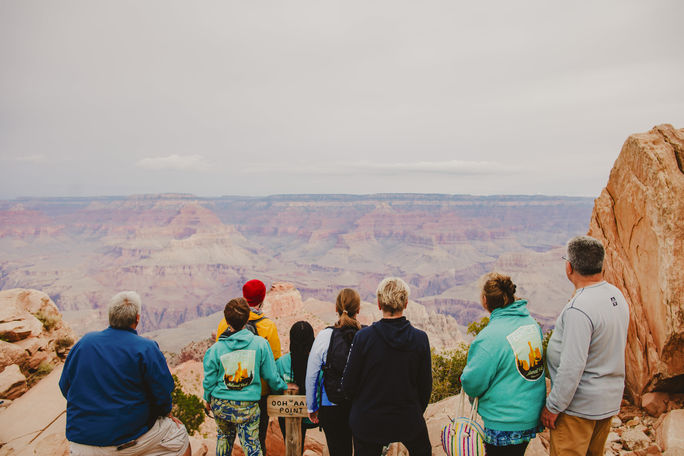
Intrepid Travel at the Grand Canyon. (Photo Credit: Intrepid Travel)
Consider the Client
But building an extensive network of like-minded suppliers
and partners is just one part of the equation. Consider the client. Travel
Advisor Tara Bryan of Odyssey
Travel explained that younger
generations are more aware of sustainability issues. However, more established
clients are usually open to advice on making trips more impactful. “It’s
equally important to guide mature travelers who may not yet have sustainability
on their radar,” Bryan explained. “Helping them understand the impact of their
choices — and showing them how meaningful and enriching sustainable travel can
be — is one of the most rewarding parts of what I do.”
Bryan takes the same approach. “By helping travelers understand the impact of their decisions and showing them sustainable options
they may not have considered, we empower them to explore the world in a way
that’s both meaningful and responsible,” she said.
"Meaningful" doesn't always depend on the length
of a trip, but on the intentionality of clients who are willing to go deeper
into a destination with the time they have, whether it's a short break or a
longer stay.
When planning slow travel, Peltonen’s luxury clients
expect a multi-week journey. She added that “even if they only have two weeks,
they still want to be very intentional with their time.”
Gade-Sawicki observed that, in her bookings, rather than
spending three days in one destination and then moving on to the next, her
clients are asking to spend longer periods in a single location. "I've had
multiple clients choose a single location and really explore it, which allows
them to go beyond the surface," she said.
Tech and Impact Travel
Younger generations aren’t just more conscious of
sustainable travel; they are actively pursuing purposeful travel. American
Express President Audrey Hendley said in the company's 2025 Global Travel Trends Report that “travelers, especially Millennials and Gen Z, are
motivated to book thoughtful, meaningful trips…”
But these two generations are also leaning into new
technology during the trip planning and booking processes. Specifically, in a
study of more than 8,000 global respondents with household incomes of US$50,000
or more, 40% of Millennials and Gen Z are turning to Generative Artificial
Intelligence (GenAI) for activity recommendations, while 33% are using it for
personalized trip recommendations. Yet, the Phocuswright research found that
Online Travel Agencies (OTAs) lag in market share for experience bookings,
accounting for just 8% of gross bookings. That is attributed to both slim
profit margins on these bookings and the fact that many activity-based tour
companies lack modern booking systems, further limiting their online
visibility.
Phocuswright’s research also looked at the future impact
of AI, which it called an unknown variable. If Agentic AI, which surfaces more
content to users, is widely adopted by travelers, it could lead to more online
bookings. This is dependent on existing content across channels such as social
media, user-generated reviews, press coverage and access to reservation
systems.
But given that there are currently many activity providers
with a small digital footprint, Agentic AI will struggle to gain a foothold in
this sector. That bodes well for travel advisors who have trusted relationships
with suppliers that can deliver on promises of sustainability, authenticity and
connection.
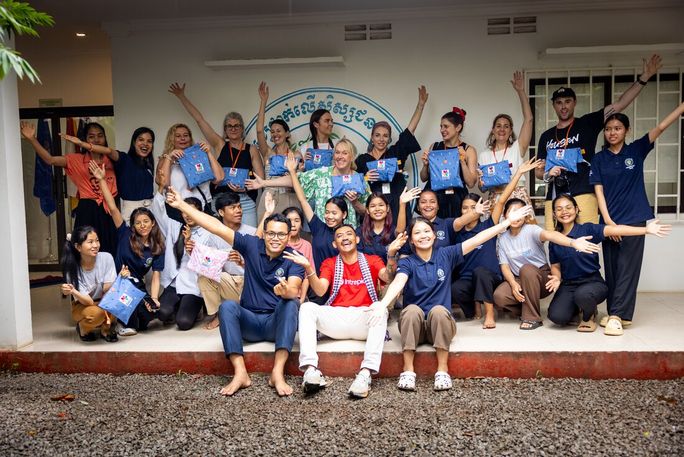
Intrepid Travel Cambodia. (Photo Credit: Intrepid Travel)
Intrepid Travel Expands Purposeful Journeys
Model to North America
While many travel companies navigated uncertainty in 2025,
Intrepid accelerated growth, reporting bookings up 26% year over year to US$620
million and revenue climbing 29% to US$575 million. North America delivered
double-digit gains, a direct result of targeted investment as the company’s
2030 strategy identifies the region as its largest and most important growth
opportunity.
“We’re targeting US$350 million in bookings for North
America by the end of the decade, driven by a combination of deeper trade
partnerships, new product innovation and increased investment in on-the-ground
operations," explained Leigh Barnes, Intrepid Travel's President of
Americas and Board Chair of The Intrepid Foundation U.S.
As Intrepid accelerates expansion in North America, the
company continues to scale its impact globally. In 2025, The
Intrepid Foundation
distributed US$2.4 million to communities worldwide, a 42% year-over-year
increase. A new five-year Impact Strategy was also introduced, alongside an
updated Climate Action Plan, with US$1.4 million annually committed to
decarbonization initiatives.
“The Intrepid Foundation is not an add-on or a marketing
initiative, it’s embedded into how we operate as a business,” said Barnes. “It
gives our travelers and advisor partners a very tangible way to see how their
bookings create real-world impact.”
Thanks to a recently secured 501(c)(3) status in the U.S.,
organizations like the National Parks Conservation Association (NPCA) now
receive the foundation’s support. In Canada, The Intrepid Foundation’s local
partner is Water First, which works alongside Indigenous communities on water
education, training and long-term solutions. Additionally, The Intrepid
Foundation is working with travel agencies to integrate global giving into
their businesses through programs like Flight Centre Travel Group’s recently launched
FCTG Gives, which taps into its network of grassroots nonprofits to power
employee fundraising, volunteering and charitable giving at scale.
North American travelers can expect more Intrepid trips
that reflect their travel style, from unforgettable adventures in the U.S.
National Parks to premium and active experiences, and Short Breaks, which are
perfectly designed for long weekends or those who want shorter but significant
trips. New partnerships, like a recent collaboration with REI Co-op, make
Intrepid trips bookable in more places, reaching more potential travelers,
including the 25 million lifetime REI members.
In Canada, the company's fastest-growing market, Intrepid
is scaling up its operations and local partnerships to strengthen community-led
experiences. Already, a five-year, CA$500,000 partnership with the Indigenous
Tourism Association of Canada (ITAC) has launched, with 75% of Canadian trips
expected to include Indigenous experiences by year-end.
To ensure its strong North America growth projections,
Intrepid is heavily investing in its travel advisor relationships. Barnes
explained, “advisors are central to our growth because travelers increasingly
want expert guidance to travel more thoughtfully in a complicated world.”
Intrepid’s diverse portfolio appeals to a broad spectrum
of travelers, including younger adventurers, families and 55-plus explorers,
giving advisors a strong starting point to craft more personalized journeys.
Advisors can build on core itineraries by adding extra nights, unique
experiences, or upgraded accommodation tiers. For clients seeking something
entirely customized, Intrepid’s global network of destination management
companies enables the creation of fully bespoke itineraries aligned to individual
interests and travel goals.
A dedicated suite of tools underscores the company’s
commitment to the travel curator community, including:
- Receive exclusive information on FAM trips, invitations, Intrepid news and more by joining our agent email list
- An Agent Hub, complete with training modules, images and
news
- A free travel advisor's Guide to Understanding Sustainable Travel
- FAM trips throughout the year
- A 50% discount for agents independently
joining an Intrepid program and a 20% companion discount
- Competitive agent incentives
- A monthly "Intrepid Icon" prize
giveaway
- A dedicated team of Key Partnership
Managers (KPMs)
- 24/7 booking support
“Supporting
our advisor community with the right tools, experiences and incentives is a big
focus for us,” said Laura Hernandez, Intrepid Travel’s head of partnerships.
For more
information on Intrepid Travel, click here.
For the latest travel news, updates and deals, subscribe to the daily TravelPulse newsletter.
Topics From This Article to Explore


